CSC Summer School in HPC teaches thinking in parallel
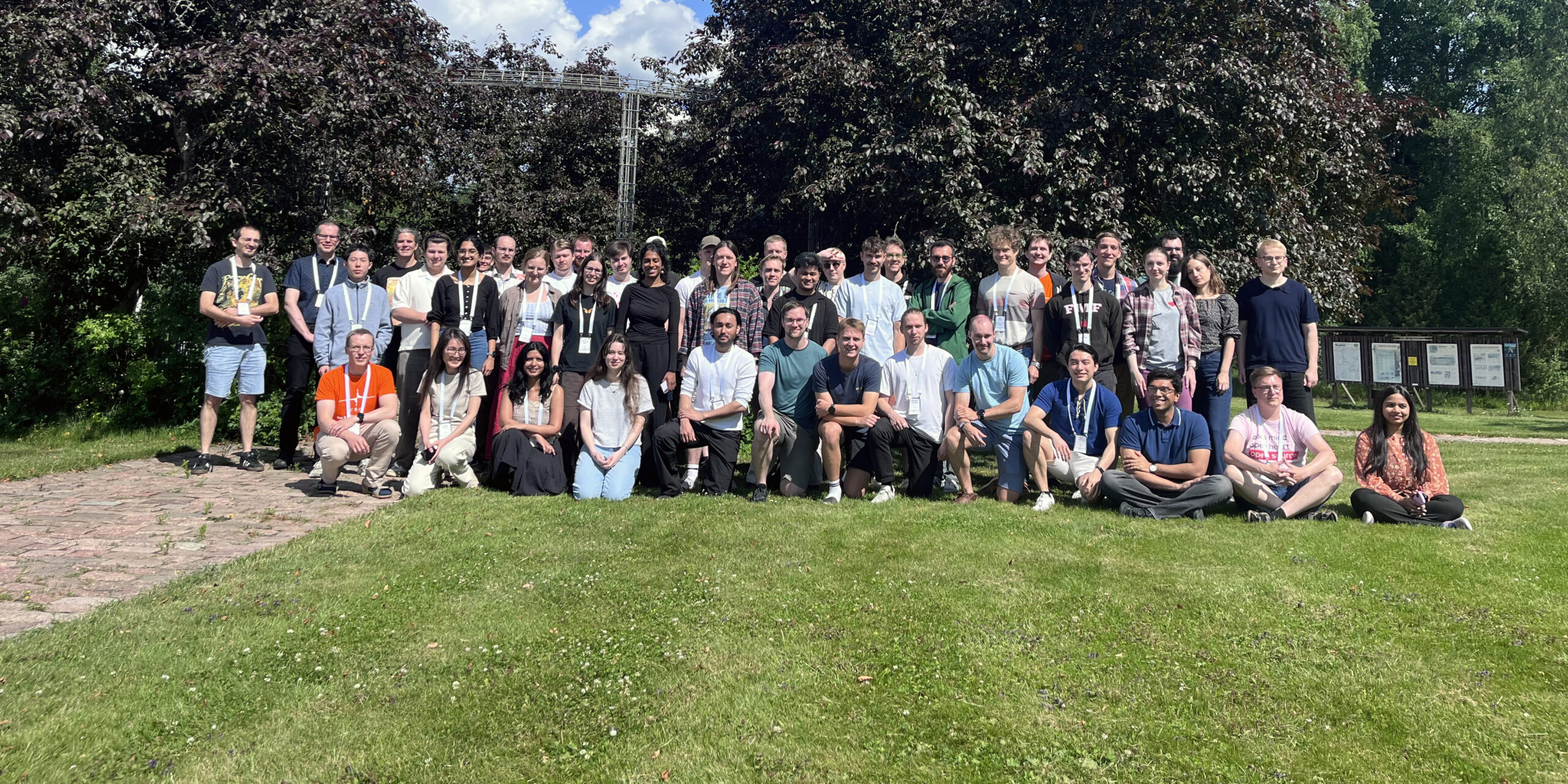
For ten days at the turn of June and July, 38 young researchers gathered in Nuuksio National Park, Finland, to learn skills needed to harness the power of supercomputers. As artificial intelligence (AI), simulation and data-intensive research continue to transform science, high-performance computing (HPC) is rapidly becoming a core skill across disciplines.
CSC’s annual Summer School in High-Performance Computing, held from 23 June to 2 July 2026, brought together doctoral students, postdoctoral researchers and senior scientists from a wide range of disciplines. Participants from various disciplines shared classes, coding exercises, lakeside saunas and late-night conversations while developing the HPC skills needed for the next generation of research.
While the program focuses on high-performance computing and the ten days can feel intensive, it’s also something else: fun.
Honestly it was great, very well organized and great to have a lot of social and outdoors activities as a supplement to the coding.
Participant of the Summer School 2026, open feedback
From beginners to advanced users
The summer school is part of CSC’s annual training programme and is one of the most established trainings at CSC. It was organized for the 15th time in 2026. Organizing the school requires months of preparation and brings together a large number of CSC’s HPC specialists as trainers and mentors.
Teaching was top-notch quality, and the provided materials will be a useful reference in the future.
Participant of the Summer School 2026, open feedback
The goal is ambitious: take participants from the basics of parallel programming toward a level where they can independently develop and optimize HPC applications for scientific research. At its best, the programme helps participants discover entirely new possibilities for their own research.
The curriculum starts with foundations before moving through MPI programming, OpenMP, GPU programming and AI-related topics. Participants typically already have programming experience in languages such as C, C++ or Fortran, but many are looking to deepen their understanding of what happens “under the hood” when their code runs on modern supercomputers.
“Supercomputers make possible the kind of science that could not be done otherwise,” says Tuomas Rossi, a Senior Application Scientist and the summer school lead at CSC. “The aim is not only to teach programming techniques but also to develop a way of thinking.”
That mindset shift is often the biggest challenge. Learning to think parallelization and parallel programming is a central theme in summer school. That is, how to express a computational problem as thousands of smaller tasks that a supercomputer can execute simultaneously?
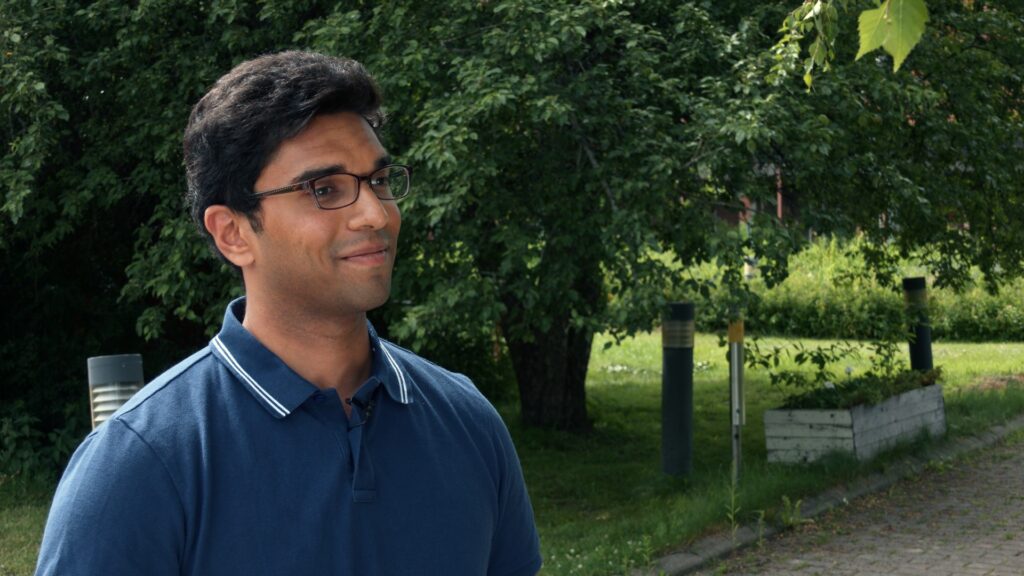
For Kalyan Pullela, a PhD researcher from Oklahoma State University studying networks for AI infrastructures, the school presented a new way of solving problems. “I don’t inherently think that way,” Pullela says. “So learning to split problems into separate chunks and run them simultaneously has been a real mindset shift.”
That perspective is becoming increasingly valuable as AI and HPC continue to converge. According to the organizers, AI tools may increasingly help write code in the future, but researchers will still need a solid understanding of parallel computing concepts to evaluate, guide and optimize what those systems produce.
“Someone still needs to understand what the code is doing,” says Jussi Enkovaara, a Senior Application Specialist and a long-time trainer for the summer school.
A universal tool for science
The range of research problems discussed during the summer school reveals just how central HPC has become to modern science.
Disciplines that have traditionally utilized HPC, like physics and climate science, are still strongly represented, but there are participants also from newer areas, such as sport science and economics. Also, in many research fields machine learning based methods are supplementing traditional simulations.
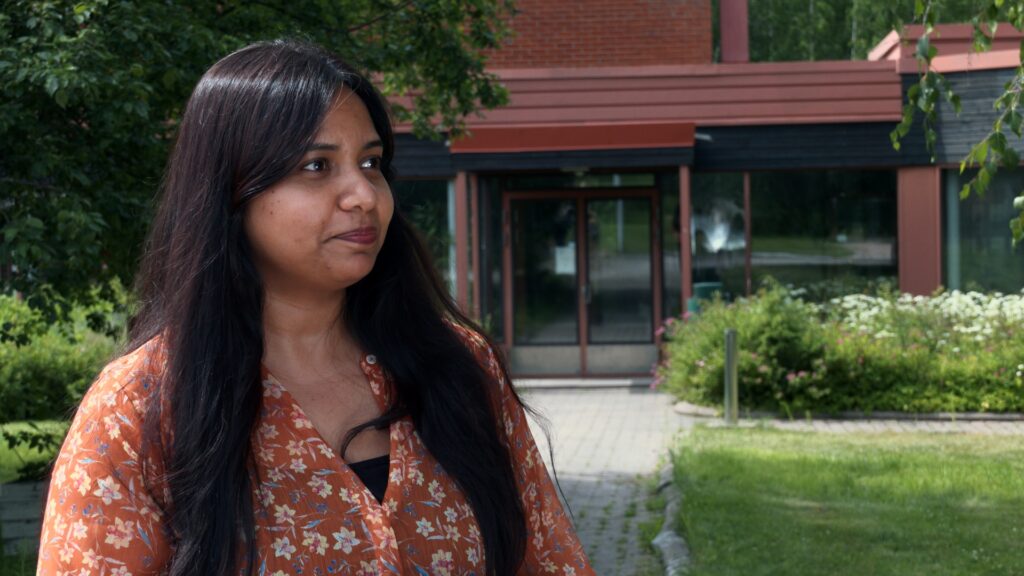
The common denominator is the necessity of computationally demanding simulations for solving scientific problems. For Shipra Sinha, a postdoctoral researcher in heliophysics at the University of Oulu who moved to Finland after working at NASA Goddard, HPC is essential for modelling Earth’s magnetosphere during geomagnetic reversals.
“We don’t have observational data for events thousands of years in the past or future,” she explains. “The work is completely dependent on simulations.”
She joined the summer school to understand how to use CSC’s supercomputers more effectively for parallel programming.
For Pullela, the appeal was different. He wanted to learn GPU programming and better understand how large-scale computing systems serve modern AI models.
“I was very interested in learning more about the programing side of GPUs that I have not had experience with before. I’m able to implement the things I’ve learned to my projects.”
Others came with equally practical goals: optimizing particle-analysis algorithms for CERN experiments, running large-scale weather and climate simulations, or improving engineering models for renewable energy systems. Despite their vastly different research questions, participants ultimately arrive at the same challenge: learning how to make solving computationally demanding problems possible.
Learning beyond the classroom
Despite intensive study days that often stretch to seven or eight hours, the social side of the experience surprises participants each year. Both learning and winding down are possible in the informal and easy-going atmosphere of the summer school.
Really nice, entertaining and playful group activities that helped in getting to know each other.
Participant of the Summer School 2026, open feedback
The program intentionally encourages interaction. For example, everyone gives a short introduction to their own research, helping participants discover connections between fields that might otherwise never meet. It also shows in practice how broadly HPC is now used in different fields of science.
Thank you all for the amazing time, the lecturers in combination with the participants made this a very nice memory.
Participant of the Summer School 2026, open feedback
“HPC is a universal hammer,” notes Enkovaara. “The conversations help participants realize just how many kinds of nails there are. It really is a skill increasingly needed in science.”
The setting contributes as well. Located in Nuuksio National Park, the summer school combines lectures and hands-on exercises with outdoor activities, campfires, lakeside evenings and a healthy dose of Finnish summer traditions, like the sauna in the evenings.
“The lectures are excellent, but the balance is what makes it work. You spend the day learning, then you go have a sauna and talk with people about their research.” mentions Sinha.
Skills for the next generation of research
The long-term impact of the summer school extends beyond technical skills. The real aha-moments most likely come after the summer school and once the learned skills are put to use in practice. Examples and exercises during the school are matched to real-life use cases as closely as possible.
Participants leave with improved programming skills, practical experience on systems such as CSC’s supercomputers and new professional networks spanning multiple disciplines and countries.
In a research landscape increasingly shaped by AI, simulation and ever-growing datasets, those skills are becoming more important than ever. While the technologies themselves continue to evolve, the ability to understand computational problems and think in parallel remains a valuable foundation.
Applications for CSC Summer School 2027 open in the spring.
Now I know exactly what steps I need to take. The knowledge from this course will help me for years.
Participant of the Summer School 2026, open feedback
Summer School in High-Performance Computing 2026
- Organized 23 June–2 July 2026
- 38 participants
- Researchers from Finland and abroad
- Topics: MPI, OpenMP, GPU programming, AI and parallel computing
- Organised by CSC – IT Center for Science.
- The 2026 Summer School received an average score of 9.8/10, N=36.
- Bull, the technology partner behind CSC’s national supercomputer Roihu, sponsored two undergraduate students to attend the summer school as part of its commitment to developing future HPC talent. The sponsorship will continue in 2027.