Open Search Symposium: At the Forefront of Europe’s Digital Sovereignty
The international Open Search Symposium brings together representatives of the web search community from October 8–10 at CSC – IT Center for Science in Espoo, Finland. The symposium offers a platform for researchers, companies, and civil society actors to develop ideas and concepts for utilization of open web search and web data. The event is organized by the Open Search Foundation and CSC.
OpenWebSearch.eu is the first EU-funded initiative aimed at launching an independent web search to safeguard free, unbiased, and open access to information in Europe. The project stems from concerns about imbalance: although web search is a cornerstone of Europe’s digital economy, it is dominated by a few gatekeepers such as Google and Microsoft.
In 2022, fourteen renowned European research institutions, including CSC, initiated the project. Its core achievement is the development of the Open Web Index (OWI), a European open web index that serves as the foundation for a new internet search in Europe. The index was published in June 2024. The web index is the backbone of search engines, web analytics and text-based AI systems, organizing vast amounts of online content into a structured, searchable format.
Perspectives from Finnish Political and Business Leaders
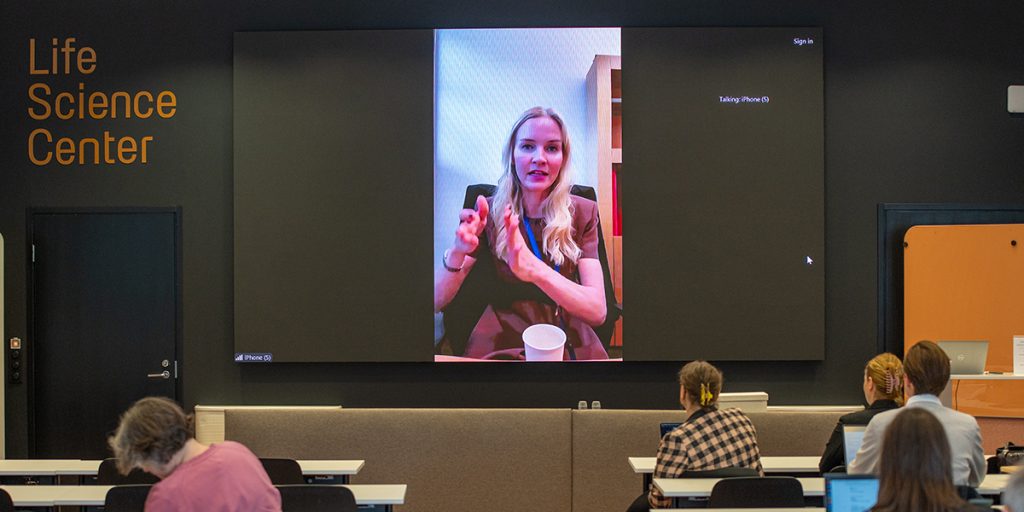
Henna Virkkunen, Executive Vice President of the European Commission, emphasizes in her recorded welcome address the need for a European neutral and transparent internet search infrastructure, and the associated AI development, where AI factories and gigafactories are fundamental.
Keynote speaker Aura Salla, Member of the European Parliament, shares her views on how Europe can strengthen its digital sovereignty. She advocates for reduced regulation, market-based solutions, and a European data ecosystem. In her view, public procurement should favor European companies when it comes to critical platforms.
Among the company representatives, Harri Ketamo (founder and CEO of Headai) explains the importance of open data for the search models of the future. He presents several illustrative examples. By combining one’s own CV with openly available data, it is possible to construct a profile that can be compared with the requirements of job postings. This, in turn, enables the identification of courses that would most effectively enhance one’s competencies.
Companies can pursue growth by recognizing their own gaps. A comparison between job advertisements requirements from leading international AI companies and Finnish firms reveals notable differences: in Finland, the emphasis lies on cybersecurity, whereas in the leading companies, marketing takes precedence.
Viivi Lähteenoja (CEO of The MyData Company), in turn, brings attention to the challenges of trust and fact verification online.
Innovative Search Applications
The symposium’s technical sessions focus on the scientific and technological aspects of web search and infrastructure, innovative search applications and technologies, machine learning, large language models, and AI-based search.
For example, Noor Afshan Fathima from CERN presents a search engine specifically designed to meet the needs of people with disabilities. The program also includes presentations on alternative search engines that emphasize privacy and transparency.
Text: Tommi Kutilainen, CSC
Photos: Mikael Kanerva, CSC
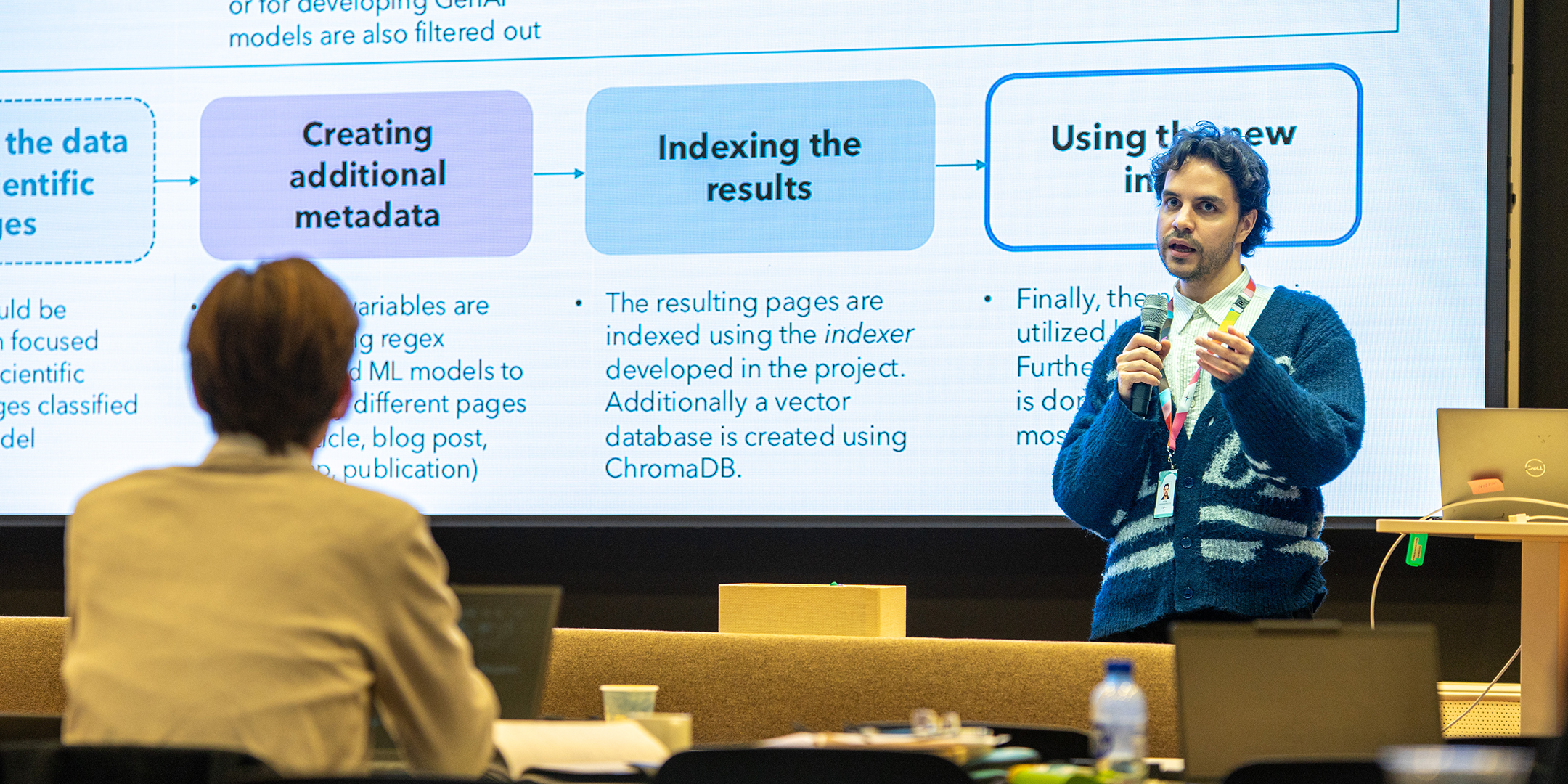
Caption: CSC’s Jason Theodoropoulos presents a science index derived from the open web index, used in the development of new search applications for research.fi.
Open Search Foundation
The Open Search Foundation
e. V. coordinates a European movement that creates the basis for independent, free, and self-determined access to information on the Internet. In cooperation with research institutions, data centers, and other partners, it promotes web search and web data usage that benefits everyone. True to the motto: “Together for a better net.”