Artificial intelligence solutions for the mining industry through research collaboration
When a mining industry player such as Metso Corporation seeks to develop and modernize its operations comprehensively, significant and challenging opportunities arise in terms of both business and research. In such cases, it is crucial to identify the right development partners and leverage their expertise. A joint research project can act as a catalyst for the development of the entire industry.
The visualization and optimization of the mining industry requires both physics modeling expertise and a data-driven approach. Artificial intelligence and machine learning models aim to improve energy efficiency, sustainability, and the quality of raw materials, among other things. The use of artificial intelligence also enables intelligent automation, which increases occupational safety, reduces the risk of accidents, and alleviates staff shortages and skills needs. Artificial intelligence can also be used to identify minerals, streamline ore processing, and reduce waste.
The three-year AIMODE collaboration project, funded by Business Finland and starting in 2022, aims to optimize mining industry processes and their real-time monitoring using artificial intelligence, as well as to develop an AI-assisted control system based on industrial data. The project was initiated by Metso, and the research partners include the Finnish Center for Artificial Intelligence (FCAI), VTT, Aalto University, Metso’s data visualization system supplier LightningChart, and data analytics company Quva.
The AIMODE research group is led by Simo Särkkä, professor at FCAI and Aalto University. The project manager is Lauri Palva, lecturer at Aalto University, and the lead AI researcher is Joonas Linnosmaa from VTT. Several researchers from Simo Särkkä’s research group at Aalto University and Anssi Laukkanen’s project group at VTT are also involved in the project. FCAI researchers are developing AI methods and applications that LightningChart and Quva will integrate into Metso’s tools.
Optimization through calculation
“Mathematical optimization problems, process models, and control systems require efficient calculation – in the mining industry as well as in other sectors. That is why the use of functional calculation systems is part of effective cooperation. The mining industry is a new frontier for us, but in terms of research, it doesn’t matter what materials are moving through the pipes, because process optimization is essentially industry-independent,” explains FCAI professor Simo Särkkä.
Without real data, it is impossible to teach machine learning models and verify optimization models. The research data required for the project has been collected from Metso’s customers’ mines, where operations are monitored using hundreds of sensors, and additional data has been produced using digital twins. Metso already uses advanced operational simulators, or digital twins, to test different conditions and their effects on mining operations before making any actual changes.
“Alongside the project, Metso is naturally also promoting its own internal development projects. It provides AIMODE researchers with authentic data, which is used to verify the functionality of artificial intelligence models. This ensures that they work as they should,” explains Joonas Linnosmaa from VTT.
Tools according to computing needs – even supercomputers are in use
“Computing programs and machines are used according to each project and computing need. It is important to the customer that we manage the systems that suit their computing needs cost-effectively on their behalf. We utilize the resources of the project members or CSC, depending on the scaling needs. We use desktop computers, local clusters, commercial cloud services, and even CSC’s high-performance computing services,” says Linnosmaa.
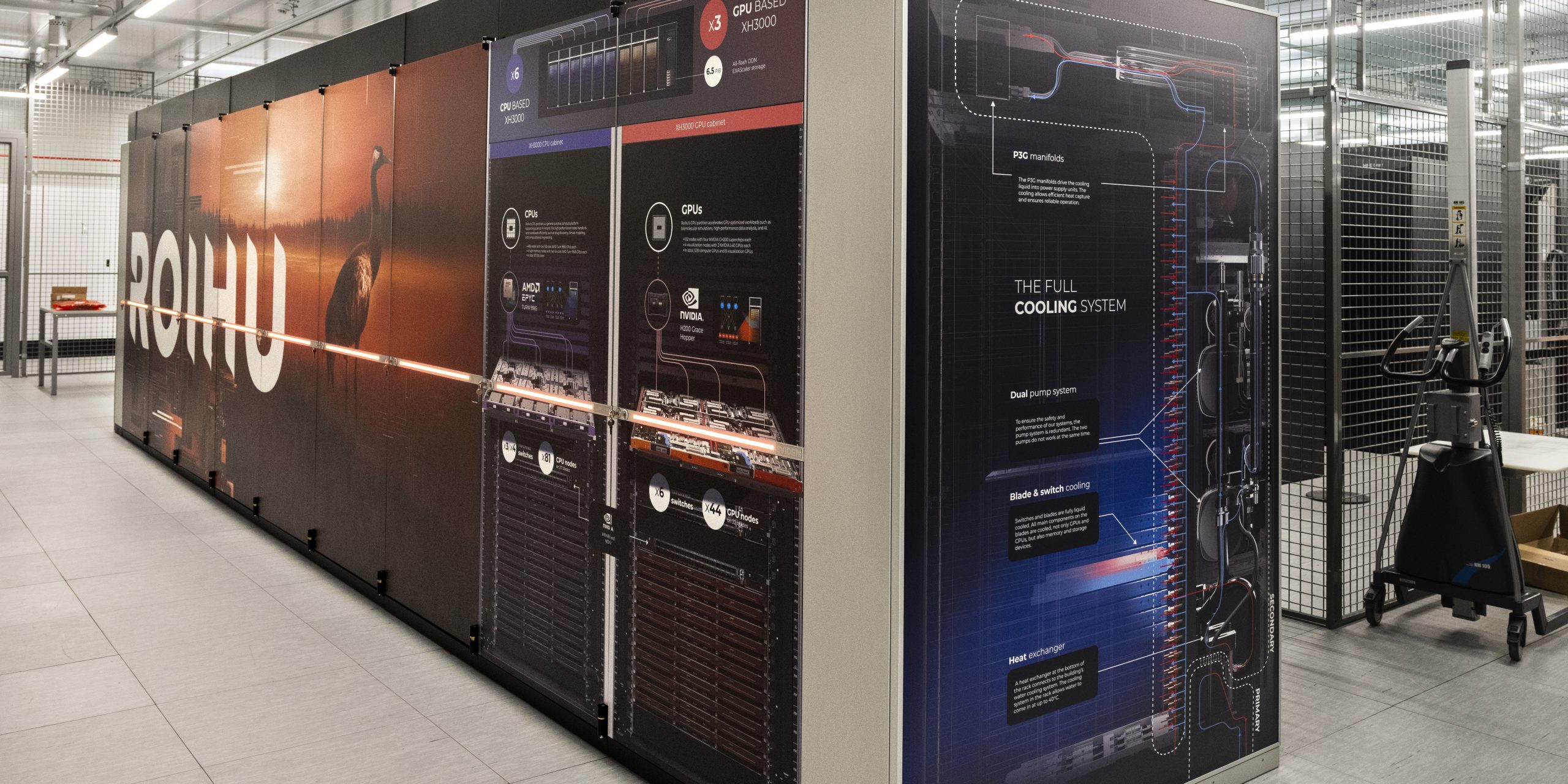
As research partners, VTT and Aalto University can use CSC’s national supercomputers Puhti, Mahti, and Allas free of charge in the project and, if necessary, also the capacity of the LUMI supercomputer or the Helmi quantum computer. LUMI is optimized specifically for the development of artificial intelligence models and is one of the world’s leading artificial intelligence development platforms.
Research models are transferred efficiently
Research models are transferred quickly and easily from one machine to another using, for example, the open source Git project management system, and each researcher independently manages the computing resources they need. Powerful supercomputers enable better and more accurate calculations based on data, as well as improved estimates of process performance and quality. Computational process development seeks to achieve greater efficiency, sustainability, and eco-efficiency by utilizing, for example, GPU units, which are used to train artificial intelligence models such as neural networks.
“Nowadays, the development of high-throughput simulation models increasingly involves the use of smaller surrogate models to screen and identify parameters for optimization. Researchers often develop their own surrogate models according to the development needs of the project using the tools they consider best, and the knowledge gained is shared smoothly between different researchers,” explains Linnosmaa.
Concrete benefits
“In AIMODE, the use of the Geminex digital twin simulation environment used by Metso for modeling was central to the project. Metso has contributed valuable industry knowledge to the project, as well as expertise in evaluating the reliability of models and results. “The interest and willingness of Metso’s customers to participate in the AIMODE research and share their usage data also enables broader development across the entire industry,” Linnosmaa explains.
New methods are being developed based on historical data and offline models. A natural next step for the AIMODE project would be to stream and analyze online data directly from mines. The results of the development are always first made available to the participating companies, and there is also active dialogue about the needs of end customers and how to make the best possible use of the research results.
“Collaborative projects benefit everyone involved. We researchers gain valuable references, which in turn lead to new projects, new contacts, and new expertise when the results are published in scientific articles. This way, the results are more widely used and benefit the entire industry,” says Särkkä.
“It is always very interesting and useful for CSC to be involved in RDI projects as an enabler of computational simulations and the use of new technologies. We want to provide researchers with the best possible tools. Smooth cooperation between companies, universities, and CSC is a particular focus of our development efforts, because it is essential for Finland as a whole that the world-class computing resources acquired to support domestic and European research projects are used efficiently in research and business applications,” says Development Manager Dan Still from CSC.
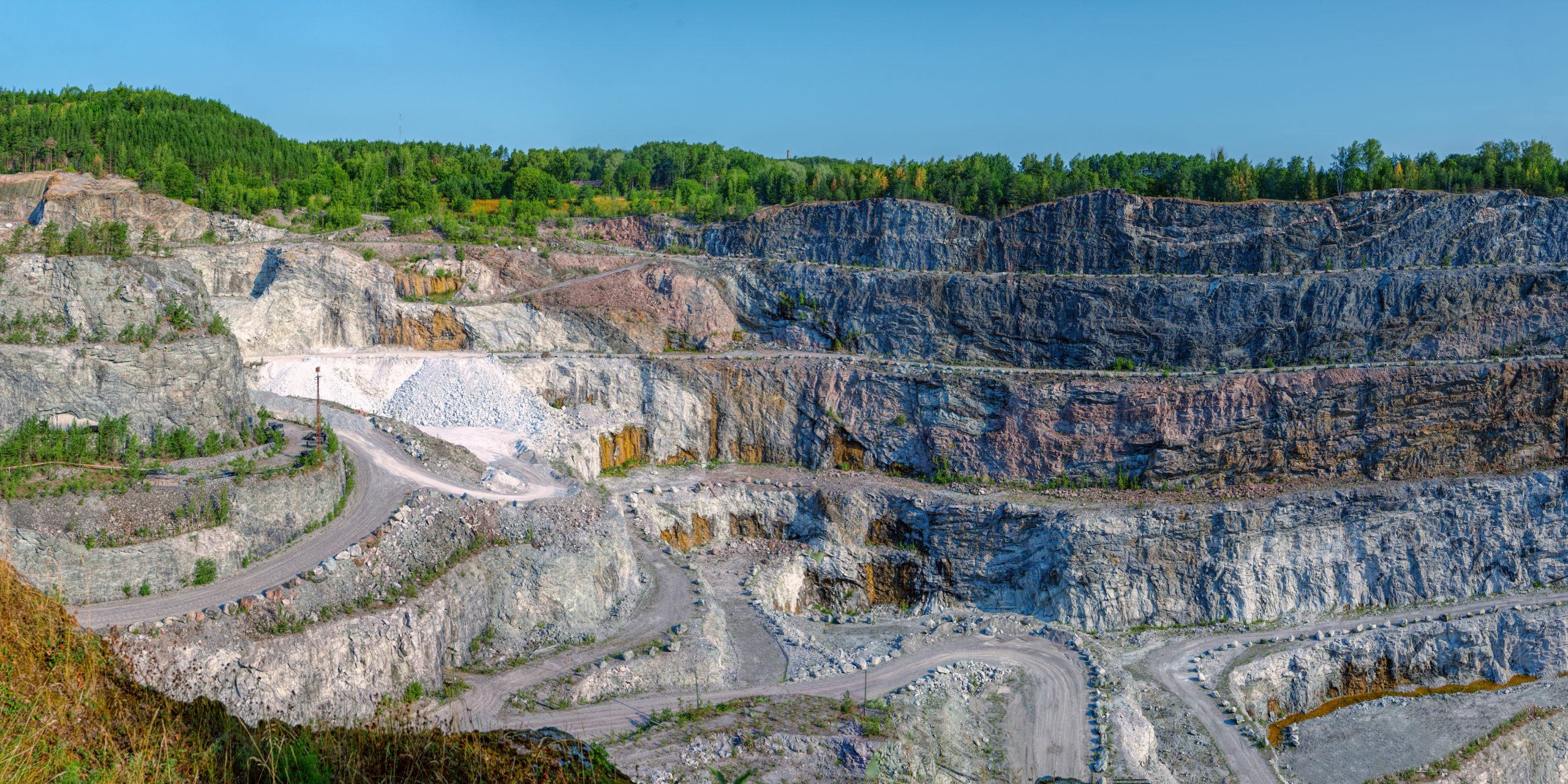
Photo: Parainen limesone quarry, Adobe Stock.
Read more

Dan Still
Dan Still works with building industrial partnerships and networks to boost industrial HPC use.