How do we ensure reliable assessment in the age of AI?
Generative AI and new digital tools are challenging traditional ways of assessing competence. In response, Finnish higher education institutions are jointly developing practices and the EXAM assessment environment to ensure that students can demonstrate their knowledge and skills reliably, also in the age of AI.
Recent public discussion in Finland about educational assessment (for example, in Helsingin Sanomat, 18 August 2026) has focused on whether students can misuse new technologies, such as AI tools or smart glasses, during exams and assessments.
The concern is understandable. Generative AI accompanied by smaller and smaller digital devices are challenging assessment practices in ways that would have been difficult to imagine only a few years ago. AI has reached a stage where it is often almost impossible to determine the extent to which a learner is demonstrating their own competence and the extent to which the output is generated by AI. This undermines the trust on which assessment is built.
AI does not make digital assessment impossible, but it does make the reliability of assessment more important than ever. For this reason, higher education institutions must establish shared practices and environments where competence can be demonstrated reliably, even in the age of AI.
It must be acknowledged that simply blocking individual devices or applications is not enough to solve the problem. Every new generation of technology will be followed by another. What is needed are new frameworks, practices, and assurance mechanisms. Ultimately, the question is not how to prevent the use of the next technology. The question is how to assess competence sustainably in a world where everyone has continuous access to AI.
EXAM combines flexible examination with reliable assessment
In Finland, higher education institutions form a shared learning ecosystem in which students can study at multiple institutions, move between universities, complete cross-institutional studies, and benefit from shared services. Reliable assessment must also be developed collaboratively.
Ultimately, the question is not how to prevent the use of the next technology. The question is how to assess competence sustainably in a world where everyone has continuous access to AI.
Finnish higher education institutions have a long history of cooperation in developing digital assessment. The collaboration network formed by the EXAM consortium has demonstrated that common practices can be built at a national level for the benefit of students, teachers, and institutions alike. At the same time, shared guidance documents, such as the recommendations on the use of AI in teaching and learning published by the Rectors’ Conference of Finnish Universities of Applied Sciences, Arene, provide a strong foundation for defining the role of AI within courses and learning processes.
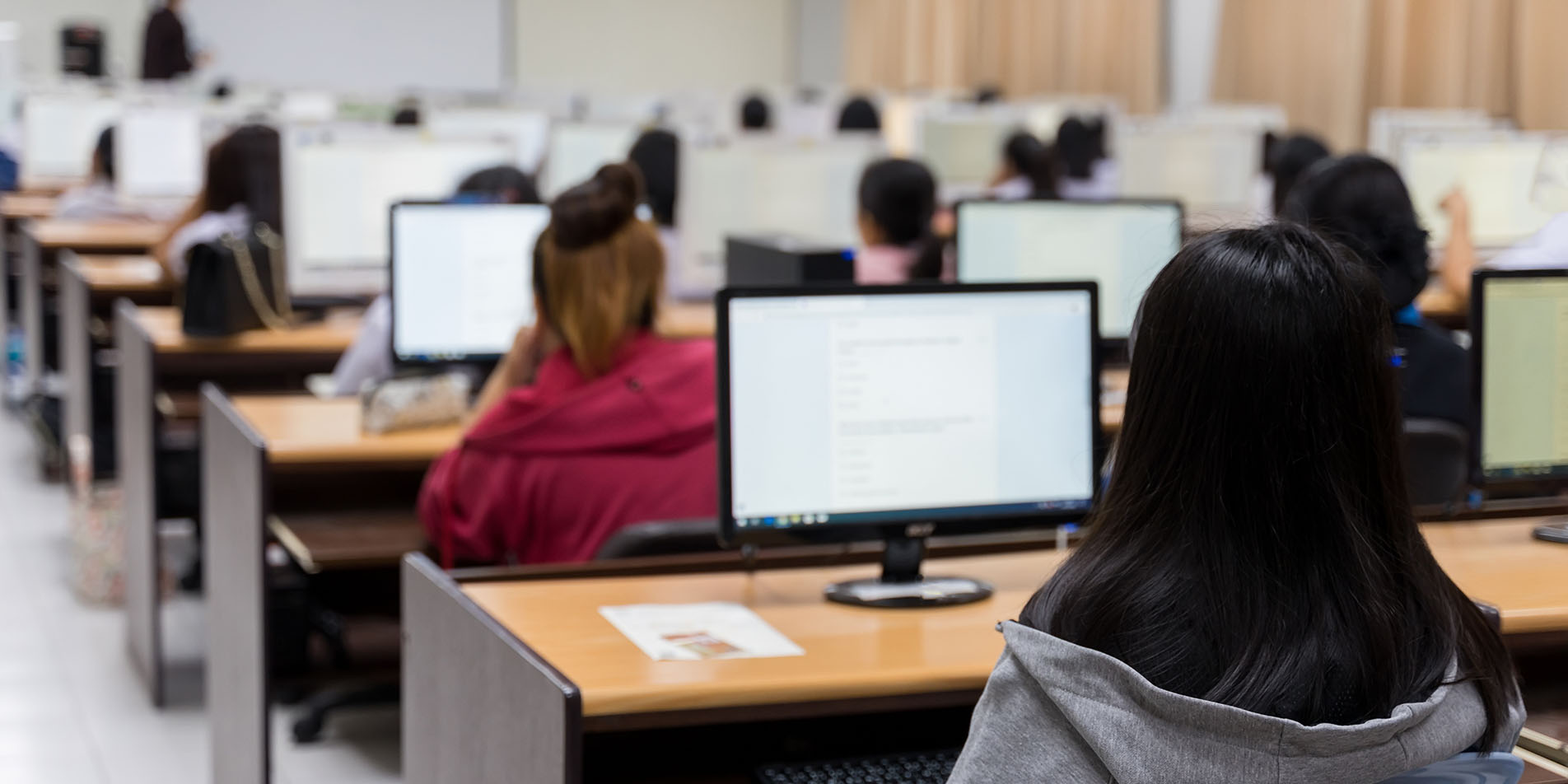
EXAM examination rooms provide higher education institutions with a reliable way to manage and restrict which applications and systems students can access during an exam. For students, EXAM offers flexibility, as exams can be taken by booking a suitable time slot in an examination room.
The internationally unique EXAM visit service allows students to take their exam at the higher education institution closest to them, reducing the need for travel in different life situations.
Supervised assessment environments like these are more than a technical solution. They are a key component of reliable assessment and of maintaining the credibility of competencies, qualifications, and degrees.
Trust in degrees is built through shared practices and solutions
Trust is often discussed as though it were the starting point of assessment. In reality, trust is the outcome. It is created through credible practices, transparent processes, shared rules, and appropriate assurance measures. Only then can students trust the fairness of assessment, teachers trust its accuracy, and society trust the competence represented by a degree.
This is therefore not only a question of assessment practices, but also of societal trust. As citizens, can we trust that trained professionals possess the competencies required for their work? Can employers trust that graduates have the skills needed in working life? Can students trust that assessment is fair and that the same rules apply to everyone?
Technology can and should be used to support learning. At the same time, there must be ways of demonstrating competence that students, teachers, employers, and society can trust. Building this trust requires shared practices, collaboration, and solutions such as EXAM.
Image: Adobe Stock
What is EXAM?
EXAM is a shared electronic examination system operated by a consortium of Finnish higher education institutions. Students take exams at a time they have booked themselves in a supervised examination room using a device provided by the institution. This type of environment offers a reliable way to assess competence, even in the age of AI.
CSC serves as the service provider for EXAM.
Read more

Topi Litmanen
Topi Litmanen is responsible for educational technology services.