Collaboration Forum seminar brought Finnish research organizations together to discuss the future of data, AI and scientific computing
The first seminar of the Scientific Computing and Data Management Collaboration Forum (YTF) was held on 4 November 2026 at CSC in Espoo. Throughout the day, experts from Finnish research organizations, universities, universities of applied sciences, research institutes, the Ministry of Education and Culture, and CSC discussed the ongoing transformation of research data management, scientific computing and AI, and their impact on the research ecosystem.
The seminar was opened by YTF Chair Topi Hanhela, Chief Digital Officer at the Natural Resources Institute Finland (Luke). He outlined the day’s objectives: to strengthen a shared understanding of the current landscape, identify common development needs, and advance discussions towards concrete actions.
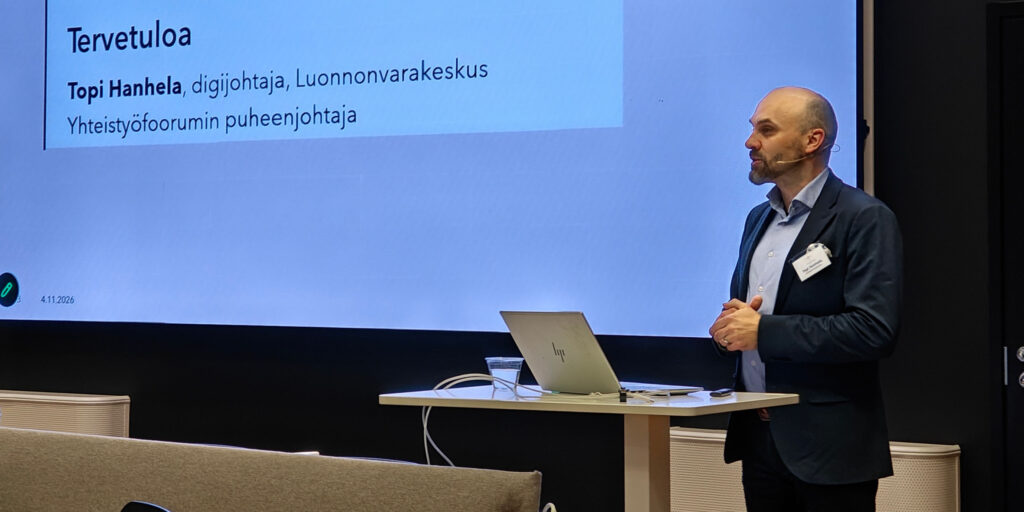
Around 50 participants attended in person, and a nearly equal number joined remotely.
AI is fundamentally transforming research
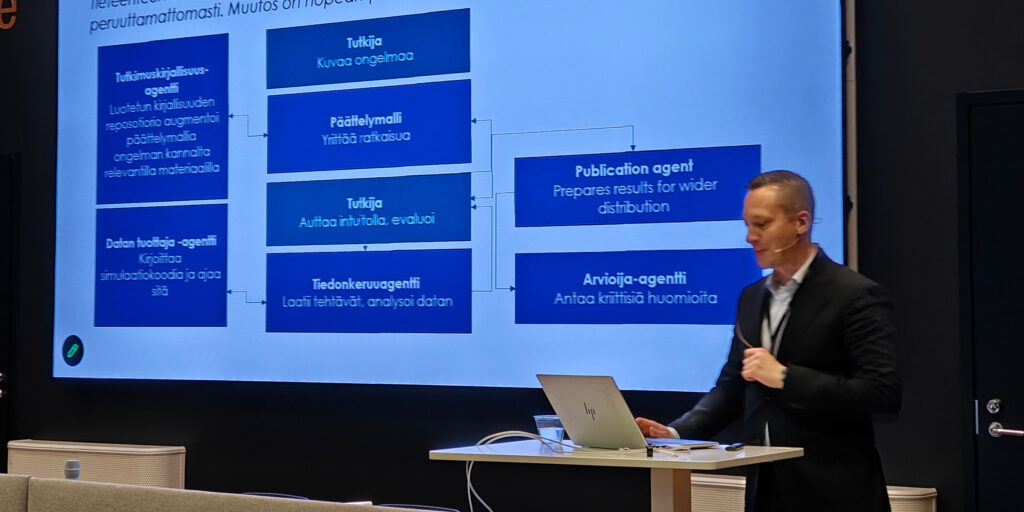
In the morning keynote, Pekka Manninen, CSC’s Director of Science and Technology, explored the future of high-performance computing and AI. He described a research environment increasingly driven by data and supported by AI, where agent-based AI solutions may contribute to various stages of the research process, from information retrieval and analysis to publication of results.
His presentation also highlighted Europe’s digital sovereignty, the importance of maintaining domestic computing and data infrastructures, and the LUMI AI Factory, coordinated by CSC. The initiative aims to strengthen European AI expertise and innovation ecosystems.
Panel discussion focused on data, leadership and research transformation
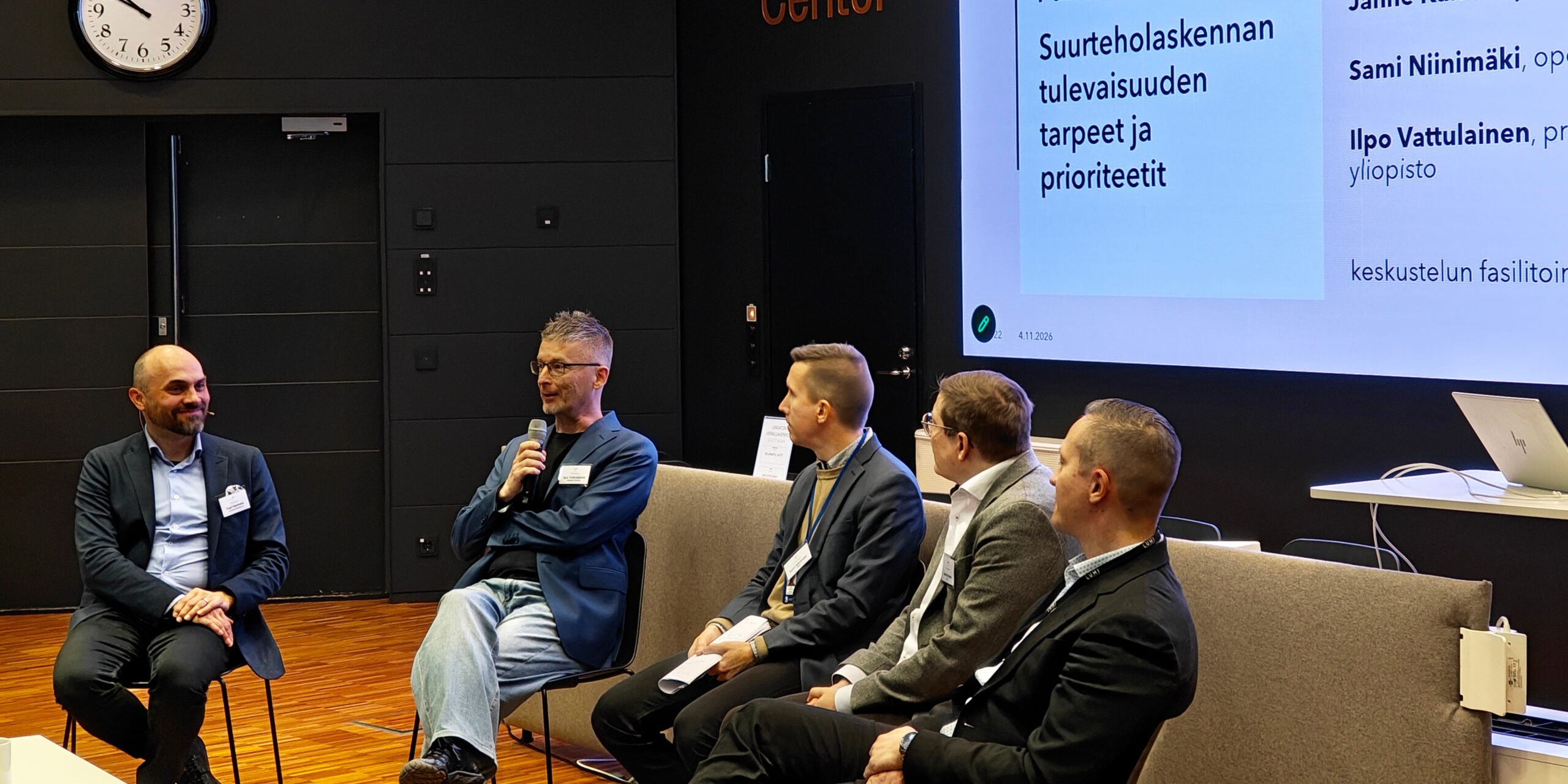
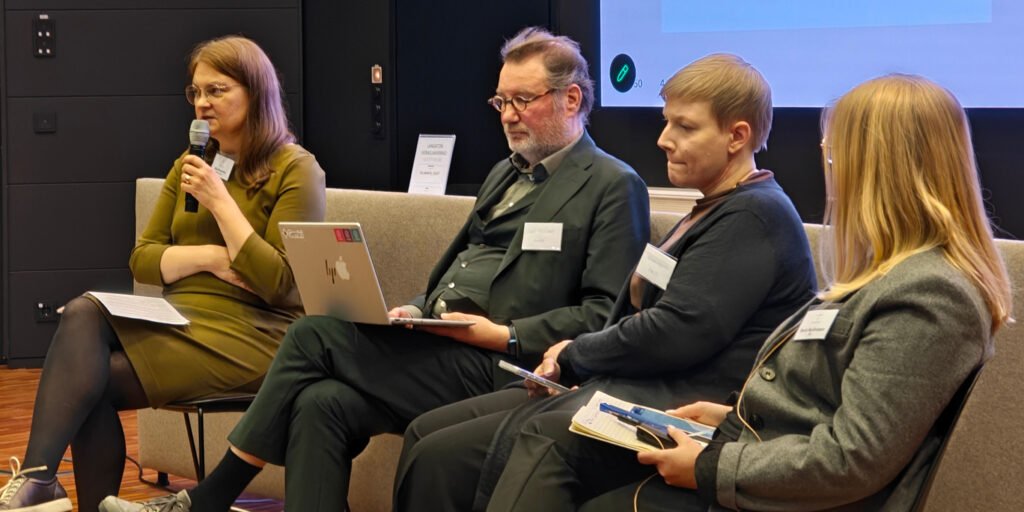
A panel discussion (see main photo) joined by Manninen, Janne Kanner, Director of Data Management Services at CSC, Sami Niinimäki, Ministerial Adviser at the Ministry of Education and Culture, and Professor Ilpo Vattulainen from the University of Helsinki, and moderated by Topi Hanhela, examined the future of research in the age of AI. Key themes included the identification of strategic data, interoperability of research datasets, and organizations’ ability to adapt to AI-driven change.
According to the panelists, technology itself is not the greatest obstacle. Rather, challenges arise from organizational cultures, fragmented practices, and unclear responsibilities. At the same time, the panelists emphasized the need to safeguard research integrity, maintain critical expertise, and ensure the long-term development of research infrastructures despite the rapidly evolving technological environment.
The discussion also highlighted the need for a shared national direction that supports the use of research data, the adoption of AI, and research competitiveness, while addressing research security, data access permissions, and responsible data use. Panelists called for greater organizational courage to enable the development and successful application of pioneering methods.
Research data as a strategic resource
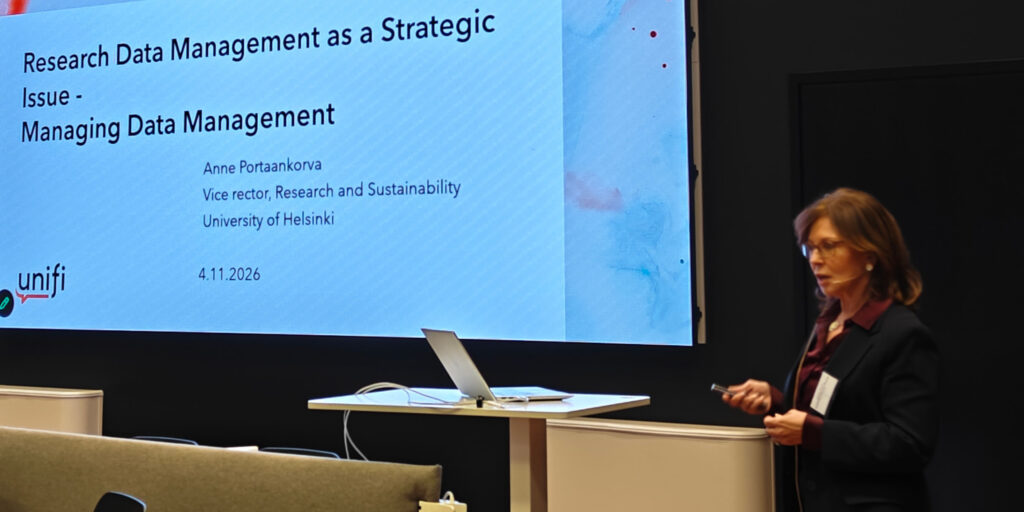
In her keynote address, Anne Portaankorva, Vice Rector of the University of Helsinki, examined research data management from a leadership perspective. She noted that Finland has a strong foundation for internationally competitive, data-driven research, but that strategic coordination and the overall service landscape still appear fragmented for both researchers and organizational leadership.
According to Portaankorva, the future of research requires a shared national vision, stronger leadership, and seamless service pathways for researchers. She placed particular emphasis on research security, the development of AI capabilities, and ensuring sufficient data and computing capacity for research in the long term.
The value of data lies in its impact
Hanna Tolonen, Director General for Research, Development and Innovation at the Finnish Institute for Health and Welfare (THL), provided the perspective of research institutes in her commentary speech. She described how data flows from research through governmental processes into decision-making and ultimately to societal impact. The goal of data management is not data itself, but its effective use for research, policymaking and the benefit of society.
Tolonen emphasized data quality, interoperability, metadata, and maintaining trust in data use. She noted that AI cannot solve problems caused by poor-quality data. Instead, high-quality, well-documented and responsibly managed data is a prerequisite for the effective use of AI.
Interoperability and researcher-centric services as key themes
The morning programme concluded with a trialogue featuring Ella Bingham, Director of Research Services at Aalto University, Ari Rouvari, Secretary General of the AAPA Network, and Stina Westman, Professor of Practice at Aalto University and former Chair of YTF. The discussion was moderated by Eeva Nyrövaara, YTF Secretary and Customer Solutions Manager at CSC. The participants explored the transition from data management towards data utilization. The need for national coordination, shared reference architectures, and opportunities to build a more coherent service ecosystem for researchers emerged as key themes.
The discussion also addressed the impact of AI on service development. AI was seen as offering opportunities for metadata generation, service guidance and support for data management, while organizations were reminded of their responsibility to ensure a controlled and responsible adoption of AI technologies.
Workshops identified shared strengths and areas for development
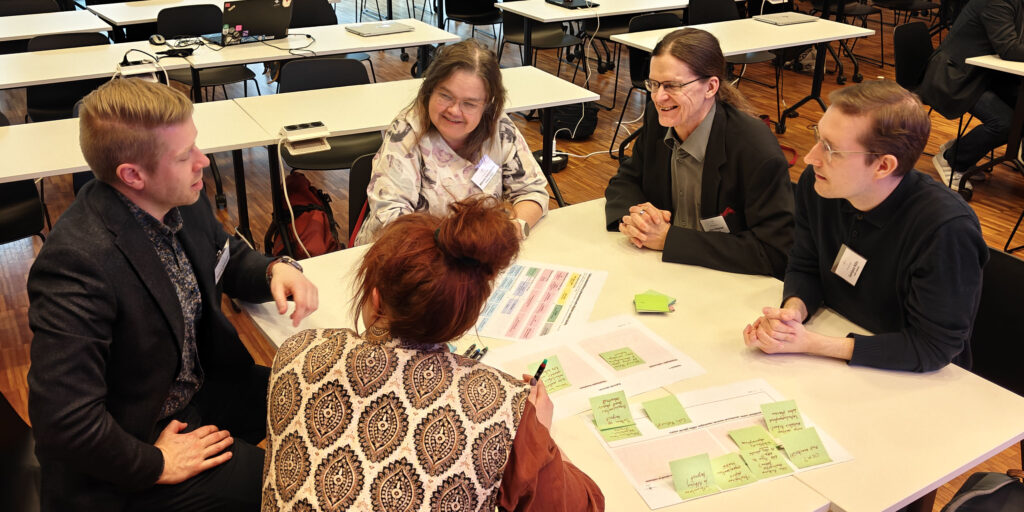
The afternoon was dedicated to collaborative workshop sessions facilitated by YTF expert member Sonja Sipponen, Service Manager at CSC, and Nina Kahma, Senior Designer at CSC. Participants examined the current state of research data management and scientific computing, existing collaboration structures, and future development needs.
The workshops identified several strengths in the current landscape, including strong national infrastructure, high levels of expertise, a long tradition of collaboration, and a deep understanding of researchers’ needs. Key challenges included fragmented responsibilities and mandates, a large number of actors and networks with insufficient information flow between them, questions related to data ownership and privacy, limited discoverability of services and difficulties in aligning national and organizational-level solutions.
Development themes identified during the workshops included a shared governance and implementation model, researcher digital identity, data mobility between services, service catalogues, and machine-readable data management plans. These topics will form the foundation for a future roadmap aimed at improving interoperability.
Moving towards implementation
At the end of the seminar, Hanna-Mari Puuska, Director, Data and Research Information Management Services at CSC, summarized the day’s discussions and outlined the next steps. The overarching goal is to build a seamless service ecosystem for researchers, where data management, computing, authentication, publishing and research information management work together as an integrated whole.
The seminar delivered a clear common message: Finland has a strong foundation for internationally competitive, data-driven research, but the next stage of development will require even closer collaboration, a shared vision and practical solutions that can be implemented across the research ecosystem. The dialogue and cooperation will continue within YTF activities and through follow-up events for research organizations during December 2026 and throughout 2027. Participants also expressed interest in establishing the YTF seminar as an annual tradition, with plans to reconvene in a year with a similar community of stakeholders.
You’ll find the seminar presentations in Finnish in the link below. A summary of the workshop results will also be published on the same page in the coming weeks.
Text and photos: Elina Ajalin, CSC
Read more
More information

Janne Kanner
Janne Kanner leads data management strategy and services at CSC.

Eeva Nyrövaara
Eeva Nyrövaara is a Customer Solution Manager for scientific computing.